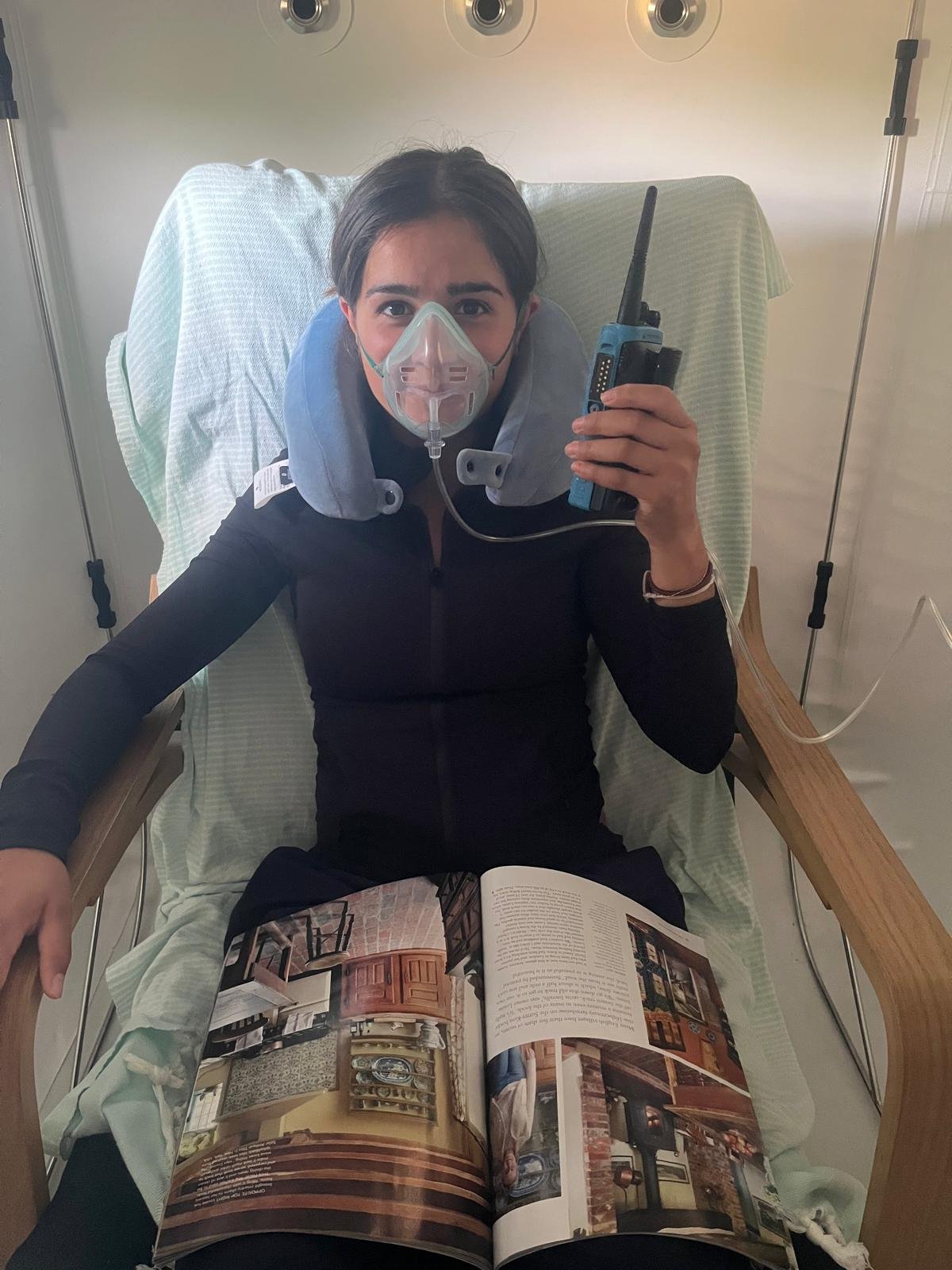
HBOT
Give your brain and body more of what they need to recover; OXYGEN!
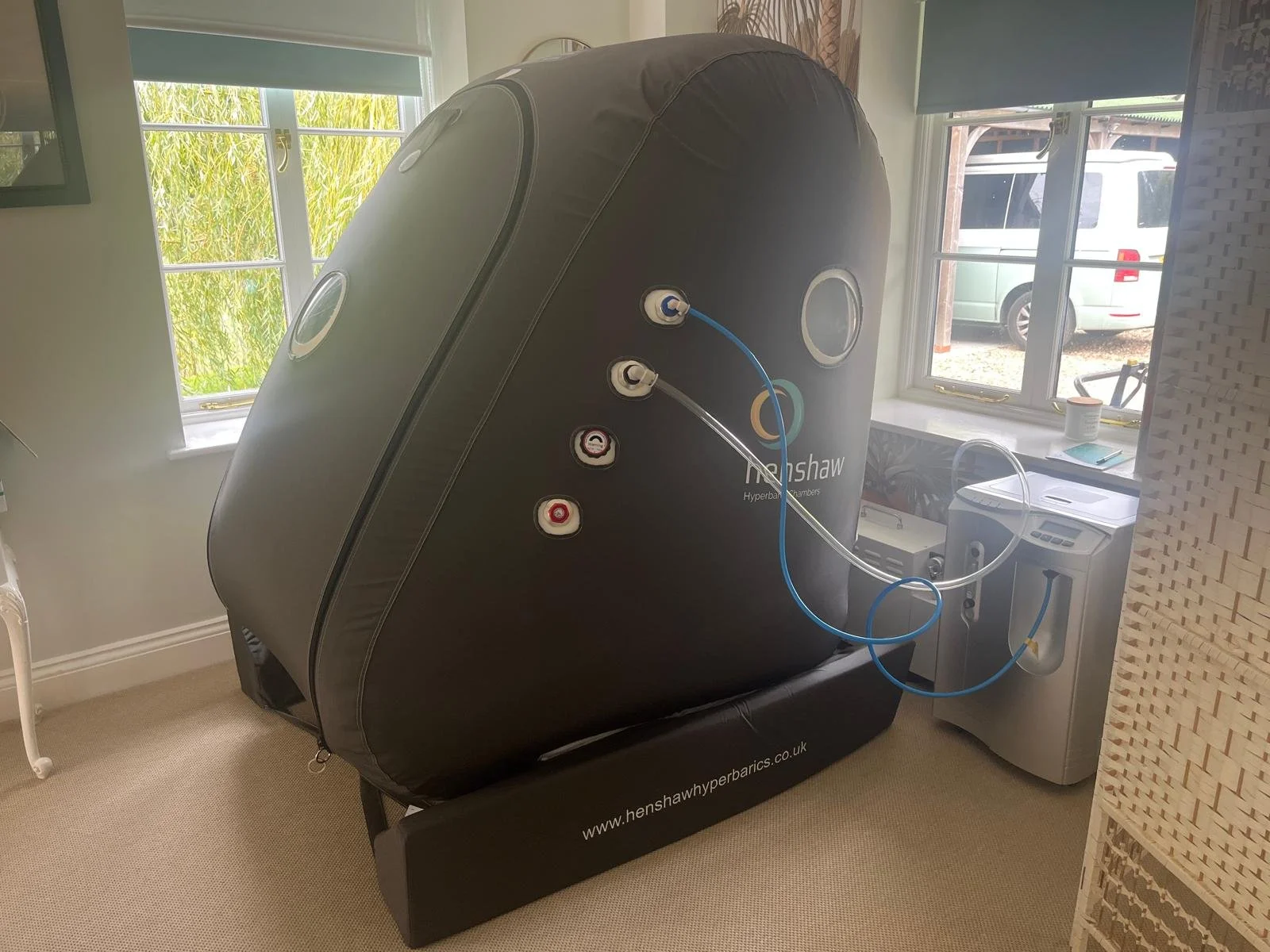
Mild Hyperbaric Oxygen Therapy (HBOT) in our soft shell chamber forms part of our integrated approach to brain health, nervous-system function, tissue health, recovery and wellbeing.
Mild hyperbaric therapy (1.3–1.5 ATA, soft chambers) is distinct from hard-shell hospital chambers used at higher pressures. The research supporting this pressure range is robust, with an ever-growing evidence base, spanning decades of clinical and research and a strong safety profile.,
Our 1.3 ATA HBOT involves breathing high-concentration oxygen at slightly elevated atmospheric pressure, allowing the body to absorb significantly more oxygen at the cellular level than normal breathing allows. The increased pressure is scientifically proven to allow significantly more oxygen to dissolve into the blood and reach the brain, body’s tissues and other bodily fluids that may be oxygen-deprived due to injury, inflammation, or degeneration.
Oxygen is fundamental to cellular energy, tissue repair and recovery. By increasing oxygen availability, HBOT supports the body's natural healing and recovery processes to:
Improve energy levels
Improve tissue function
Promote collagen, bone, and cartilage repair and regeneration
Reduce swelling and inflammation
Reduce pain
Increase the body’s antioxidant defences
New tissue
New blood vessels / angiogenesis
Improved and enhanced immune system
Regeneration and renewal (your body and its organs and organ systems)
Prevent premature ageing
Increase blood flow
Promote healing
Increase energy
Improve sleep
Enhance stem cell function
Supporting Brain Health
A growing body of peer-reviewed research supports mHBOT for brain health, inflammation reduction, recovery from neurological injury, and cellular healing. Studies have demonstrated improvements in cognitive function, neuroplasticity, and tissue repair in patients with traumatic brain injury, stroke, and neurodegenerative conditions. These applications remain an evolving area of clinical research
HBOT is used to support:
Brain & neurological health
Recovery following TBI and concussion
Neurodegenerative health and offset dementia
Neuropathy and nerve function
Fatigue and brain fog
Sports injury and physical recovery
Neuroplasticity
Mitochondrial function
General health, wellbeing and healthy ageing
The gold standard of Hyperbaric oxygen therapy is 40 sessions, preferably in close succession.
Think of it like an ‘oxygen supplement’... The extra oxygen reacts with glucose in the body to produce ATP (adenosine triphosphate), the principal molecule for storing and transferring energy in cells. This stored energy can then be used for future reactions, giving the body extra capacity to fight disease, accelerate the healing of injuries, and improve overall health and vitality. More Oxygen, More Energy…
Combining HBOT with LLLT allows a more targeted approach infusing more specific areas with high energy photons and increased oxygen, resulting in shorter and less frequent treatment sessions (from 5/week to 2or 3) and speeding up recovery and relieving pain, inflammation, and boosting blood flow and healing almost immediately
Frequently asked questions:
1. What happens during an HBOT session?
There are several stages during a typical therapy session. • The first stage is compression, in which the chamber is pressurised to the required pressure • You may feel warm for a few minutes at the start of your therapy • You may feel a slight pressure in your ears or sinuses during the session. You will be guided by your HBOT therapist to relieve any discomfort • The chamber is maintained at this pressure (depth) whilst you breathe in the oxygen for the length of time prescribed in your programme (60 – 90 minutes) You may feel sleepy during your therapy • The chamber is then depressurised, and your session is finished • You may feel cool and slightly tired at the end of your therapy
2. What does Hyperbaric Oxygen Therapy feel like?
As HBOT is a pressurised air therapy, the start and end of your session may feel like the take-off or landing of an aeroplane. As the pressure builds in the chamber, the pressure builds within your ears, which may leave you with an ear-popping or fullness sensation. This sensation should only last 10-15 minutes, and our guided HBOT Therapists will guide you to relieve any ear pressure. Once the desired pressure is reached, you may feel sleepy, and you can relax and breathe normally for the duration of your session.
3. Is Hyperbaric Oxygen Therapy safe?
Hyperbaric Oxygen Therapy is an extremely safe, non-invasive therapy, with very few rare potential side effects. Your HBOT Therapist will discuss the safety aspects with you in detail at your initial assessment. Our HBOT chambers have built-in safety devices to ensure that risk is minimised and that your safety and well-being is at the forefront of everything we do.
4. What are the side effects?
Hyperbaric Oxygen Therapy is extremely safe. The pressure used in our HBOT Chambers is mild, and therefore any side effects are extremely rare. However, it is common to feel slightly tired following your HBOT session.
5. Can I overdose on Hyperbaric Oxygen Therapy?
Our HBOT Chambers offer a mild level of hyperbaric oxygen, so overdosing is virtually impossible. However, our skilled HBOT therapists will develop a programme to ensure the correct levels are used for your requirements.
6. Will I feel claustrophobic?
Some people do feel claustrophobic during their therapy session; however most chambers have several viewing panels which have been designed to help prevent feelings of claustrophobia and allow as much light into the chamber as possible. You will never be locked into the chamber, so should feelings of claustrophobia become overwhelming, we will be able to open the chamber within 30 seconds, and your HBOT therapist will be there to guide you with your breathing to help you relax again.
7. Is Hyperbaric Oxygen Therapy Painful?
No. The majority of patients find HBOT sessions relaxing and peaceful. You may experience some mild ear fullness, which is similar to the sensation you experience during flight take-off or landing. However, HBOT should not be painful. If you do experience any earaches during your therapy, inform your HBOT Therapist immediately, who will adjust the pressure of the chamber to relieve the ear pressure.
Targeted Hyperbaric Oxygen Therapy (t-HBOT)
Targeted Hyperbaric Oxygen Therapy (t-HBOT) is an approach that combines hyperbaric oxygen therapy (HBOT) with low-level light therapy (LLLT) to enhance its benefits.
Traditional HBOT increases oxygen levels in the body but cannot focus on specific areas, and the Gold Standard protocol requires up to 40 hours of therapy to see results (usually 5 days a week). t-HBOT addresses this limitation by light therapy
The combination allows for more targeted oxygen delivery, enabling therapy with lower pressures and fewer sessions (1-3 times per week). This innovation is seen as a breakthrough, making hyperbaric therapy more efficient and accessible.
Targeted HBOT (t-HBOT)
Imagine a therapy that not only floods your body with healing oxygen but also targets the exact areas where you need it most. Targeted Hyperbaric Oxygen Therapy (t-HBOT) is the breakthrough solution you've been waiting for. This cutting-edge therapy merges the power of hyperbaric oxygen therapy (HBOT) with low-level light therapy (LLLT), creating a synergistic approach to fast-track your recovery and performance.
Traditional HBOT delivers oxygen throughout your body, but it can't target specific areas, sometimes requiring long, daily sessions to see results. t-HBOT changes that. By combining oxygen-rich HBOT with the focused energy of light therapy, you can now directly target areas of injury or concern – speeding up recovery and relieving pain, inflammation, and boosting blood flow almost immediately.